Antalya Burnt Ice Cream Guide: What Is Yanıksı Dondurma and How Is It Made?
Discover Antalya burnt ice cream (yanıksı dondurma): Korkuteli goat milk, wild orchid salep, caramelised Maillard craft, and how to judge quality.
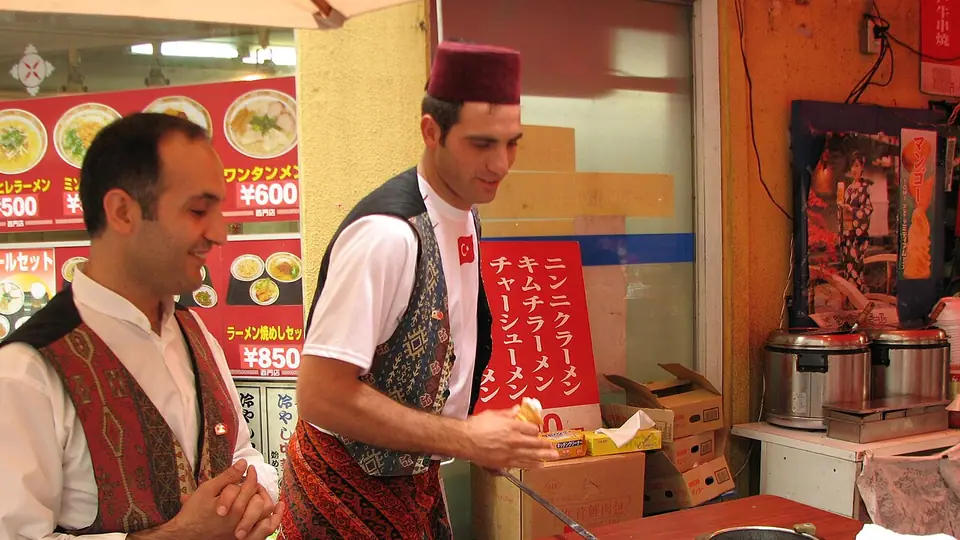
Officially registered as 'yanıksı dondurma' in Antalya's Intangible Cultural Heritage inventory, Antalya burnt ice cream is crafted from Korkuteli and Elmalı goat's milk slowly caramelised over prolonged heat and thickened with salep. It delivers a subtle smoky-caramel profile and is made both traditionally and with modern machinery.
On This Page
- What Is Yanıksı Dondurma in Official Cultural Records?
- Korkuteli and Elmalı Goat's Milk and Salep Science
- Traditional Cauldrons vs Modern Production
- Objective Criteria and Questions to Ask at the Counter
- Practical Tasting Tips
- Food Science Deep Dive: Maillard Chemistry, Caramelisation, and Salep Physics
- Mediterranean Diet & Nutrition Context
- Sensory Quality Checklist & Cold-Chain Handling
- Highland Terroir: Why Korkuteli & Elmalı Goat's Milk Changes the Aroma
- Six Critical Production Checkpoints
What Is Yanıksı Dondurma in Official Cultural Records?
Antalya's Provincial Directorate of Culture and Tourism officially documents yanıksı dondurma (lightly scorched or burnt-note ice cream) as part of the region's living culinary heritage. Despite the dramatic English translation "burnt ice cream", skilled producers never char the milk into bitterness. Instead, prolonged controlled heating triggers gentle caramelisation and Maillard reactions in goat's milk, creating a warm toasted-milk aroma without artificial flavourings.
To place this dessert within the wider culinary landscape of the Mediterranean coast, explore our Antalya Regional Desserts Guide.
Korkuteli and Elmalı Goat's Milk and Salep Science
The unmistakable character of Antalya burnt ice cream relies on three elements: highland goat's milk, natural salep, and patient heat control. Goats grazing on Taurus Mountain thyme and highland flora around Korkuteli and Elmalı produce aromatic milk well suited to slow reduction. Research archived at Akdeniz University highlights how milk dry-matter content and thermal treatment govern the physical viscosity and sensory balance of burnt ice cream.
Salep—flour milled from wild orchid tubers—provides natural glucomannan that yields a dense, elastic body and slower melting rate than aerated Western ice creams. See our detailed technical comparison in Maraş & Burnt Ice Cream vs Italian Gelato to understand why Turkish dondurma stands out in texture and heat resilience.
Traditional Cauldrons vs Modern Production
Official heritage records note that while historic production relied on open copper cauldrons, contemporary producers widely use industrial pasteurisers and batch freezers to maintain food safety and batch consistency.
| Aspect | Traditional Cauldron Method | Modern Production | Tasting Impact |
|---|---|---|---|
| Thermal Process | Prolonged open-kettle simmering | Controlled caramelisation tanks | Intensity and uniformity of toasted note |
| Dairy Base | Predominantly highland goat's milk | Pure goat's milk or goat–cow blend | Richness and aromatic finish |
| Thickener | Natural salep flour | Salep or salep + stabilisers | Elasticity and slow-melting structure |
| Flavour Balance | Pronounced smoky-caramel, subtle batch variance | Smooth, repeatable caramelised milk profile | Clean finish without acrid bitterness |
Objective Criteria and Questions to Ask at the Counter
Rather than ranking venues or making absolute "authentic vs fake" claims, use these practical, source-backed questions when ordering:
- Milk composition: Is this batch made solely with goat's milk or a goat–cow milk blend?
- Source of the burnt note: Does the toasted flavour come from slow milk heating rather than added caramel syrup?
- Texture check: Quality yanıksı dondurma should feel velvety and free of icy crystals, with a pleasant toasted-milk finish rather than harsh bitterness.
- Melting profile: Even in Antalya's warm coastal climate, it should hold its shape cleanly rather than separating into watery liquid immediately.
Practical Tasting Tips
- Let it temper: Very cold scoops mute the subtle caramel aroma; waiting two minutes opens up the toasted highland milk notes.
- Classic pairing: Enjoy plain or alongside Antalya Tahini Pumpkin Dessert for a savoury-sweet balance.
- Further reading: Check our Antalya Dessert Menu Glossary and Turkish Desserts Calorie Table.
Food Science Deep Dive: Maillard Chemistry, Caramelisation, and Salep Physics
What places traditional Turkish dondurma—and Antalya's yanıksı (burnt) ice cream in particular—in its own category of global frozen desserts is measurable food physics rather than folklore. When highland goat's milk undergoes prolonged, controlled heating, milk proteins and lactose engage in Maillard browning and gentle caramelisation, generating warm toasted, nutty, and faintly smoky aromatic compounds with zero artificial caramel syrup. Food science studies archived at Akdeniz University demonstrate that thermal duration and milk dry-matter ratio directly govern both viscosity and sensory balance: excessive heat scorches into bitterness, while patient simmering yields clean caramel depth.
Equally decisive is glucomannan, the natural high-molecular-weight polysaccharide found in wild orchid salep. Glucomannan binds free water tightly inside the dairy mix, inhibiting large ice-crystal growth during freezing and forming an elastic, crystal-free matrix. Whereas mass-market ice creams whip up to 50–100% air (overrun) to inflate volume, traditional Turkish dondurma stays dense with minimal air, delivering extraordinary melt resistance in warm Mediterranean climates.
Mediterranean Diet & Nutrition Context
Within the evidence-based framework of our Mediterranean Diet Science Guide—grounded in PREDIMED and Harvard T.H. Chan findings—minimally processed dairy treats enjoyed in moderate portions fit far better than palm-oil frozen desserts packed with synthetic emulsifiers. At roughly 180–220 kcal per 100 g (Turkish Desserts Calorie Table), traditional dondurma carries nearly half the energy density of heavy syrup pastries.
Sensory Quality Checklist & Cold-Chain Handling
- Visual check: The surface should look smooth and satin-matte without visible frost crystals, which indicate thaw-refreeze cycles.
- Flavour finish: Expect warm toasted milk and gentle caramel rather than harsh bitterness.
- Tempering: Let freezer-hard scoops sit for 5 minutes before eating so the salep elasticity and toasted aromatics open fully.
- Food safety: Never refreeze completely melted dairy ice cream; always verify dairy and nut cross-contact with staff.
Highland Terroir: Why Korkuteli & Elmalı Goat's Milk Changes the Aroma
Beyond heat control, the alpine flora of the Taurus Mountains above 1,000 metres—wild thyme, sage, and highland herbs—imparts volatile terpenes directly into goat's milk fat. Combined with smaller milk-fat globules and higher short-chain fatty acids, prolonged simmering produces a complex toasted-milk bouquet that lowland cow's milk cannot replicate.
Six Critical Production Checkpoints
- Fresh low-acidity milk intake prevents curdling during long reduction.
- Gentle controlled Maillard browning builds toasted caramel notes without scorching.
- Dry-blending salep with sugar prevents clumping and ensures silky hydration.
- Cold ageing (+4 °C) allows glucomannan polysaccharides to bind free water before freezing.
- Low-overrun freezing maintains dense, slow-melting body rather than whipped foam.
- Ideal serving temperature (-12 to -14 °C) lets subtle smoky-caramel aromatics bloom on the palate.
Pair an evening scoop with a 10–15 minute coastal stroll (Blood Sugar & Post-Meal Walking) and steady hydration (Science of Drinking Water).
If you are planning a broader culinary day beyond ice cream, see the complementary city food overview: What to Eat in Antalya — Local Food Overview.
Frequently Asked Questions
What is the official Turkish name for Antalya burnt ice cream?
In Antalya's Provincial Directorate of Culture inventory, it is officially recorded as 'yanıksı dondurma'.
Does burnt ice cream actually taste burnt or bitter?
No. Proper yanıksı dondurma has a gentle caramelised, toasted-milk aroma rather than harsh bitterness.
Which regions are associated with burnt ice cream in Antalya?
The highlands of Korkuteli and Elmalı are historically linked with the goat's milk and craft tradition.
How does it differ from Maraş dondurma?
Both share goat's milk and salep traditions, but Antalya's version is distinguished by its prolonged caramelised thermal profile.
Is machine-made burnt ice cream considered genuine?
Official cultural records explicitly acknowledge that modern industrial machinery is used alongside traditional techniques today.
What allergens should visitors check for?
Dairy (goat's and/or cow's milk) is the core ingredient; always ask the venue about nuts or cross-contamination.
Sources & Verification
Sources checked: 2026-11-25- OfficialYanıksı Dondurma Yapımcılığı — Somut Olmayan Kültürel Miras— Antalya İl Kültür ve Turizm Müdürlüğü
- AcademicSome Chemical and Physical Properties of Burnt Ice Cream— Akdeniz Üniversitesi AVESİS
- OfficialAntalya İli Yöresel Mutfak ve Tatlı Kültürü— T.C. Kültür ve Turizm Bakanlığı Kültür Portalı
Related Guides
Turkish Maraş & Burnt Dondurma vs Italian Gelato: Why Turkish Craft Stands Apart
Maraş & Antalya burnt dondurma vs Italian gelato and American ice cream: why wild orchid salep, highland goat's milk, and slow melting put Turkish dondurma ahead.
Antalya Regional DessertsAntalya Regional Desserts: From Burnt Ice Cream to Tahini Pumpkin Dessert
Complete guide to Antalya regional desserts: tahini pumpkin dessert, Arap kadayıfı, burnt ice cream, and bitter orange jam backed by official sources.
Antalya Regional DessertsAntalya & Turkish Dessert Menu Glossary
Decode Turkish and Antalya dessert menus: clear definitions for yanıksı dondurma, salep, tahini, sade yağ, kaymak, şerbet, baklava, and künefe.
Routes, Coffee & Cooling DownAntalya Summer Heat: Cooling & Café Walking Routes
Beat Antalya's summer heat with shaded Kaleiçi walks, Karaalioğlu cliff breezes, Konyaaltı promenade routes, and lighter chilled Turkish desserts.
Visitor Dessert & Gift GuideAntalya Desserts & Burnt Ice Cream Guide for Visitors
Visitor guide to Antalya desserts and burnt ice cream: what to try first, Turkish baklava, künefe, Turkish delight gifts, and menu ordering tips.
Calories, Nutrition & AllergensTurkish Desserts Calorie, Sugar & Allergen Comparison Table
How many calories in baklava, cold baklava, künefe, sütlaç, lokum, and burnt ice cream? TürKomp & USDA reference 100 g table plus allergen guide.
Calories, Nutrition & AllergensBenefits of Drinking Water: What NIH, Harvard, and EFSA Research Shows
How much water should you drink daily? NIH 25-year hydration & ageing study (eBioMedicine), Harvard, and EFSA benchmarks plus Mediterranean summer hydration.
Calories, Nutrition & AllergensBlood Sugar, Glycaemic Load, and Post-Meal Walking: What Research Shows
Sports Medicine (2022) meta-analysis and Harvard glycaemic load research: how a 10-minute walk after meals or desserts moderates blood sugar spikes.
Antalya Regional DessertsAntalya Seasonal Dessert Calendar: What to Eat in Every Season
Month-by-month Antalya dessert calendar: winter tahini pumpkin & bitter orange jam, summer burnt ice cream & cold baklava, spring palace milk puddings.
Routes, Coffee & Cooling DownAntalya District-by-District Regional Food Map: From Taurus Highlands to Coast
District-by-district culinary map of Antalya: Korkuteli burnt ice cream, Manavgat golden sesame tahini, Finike oranges, Alanya gülüklü soup, and Kaş thyme honey.