Hatay Künefe vs Levantine Knafeh: Craft, Texture, and Flavour Compared
EU-protected Turkish Hatay künefe vs Arab/Nablusi knafeh: crisp shredded tel kadayıf, dye-free caramelisation, fresh unsalted cheese, and balanced syrup.
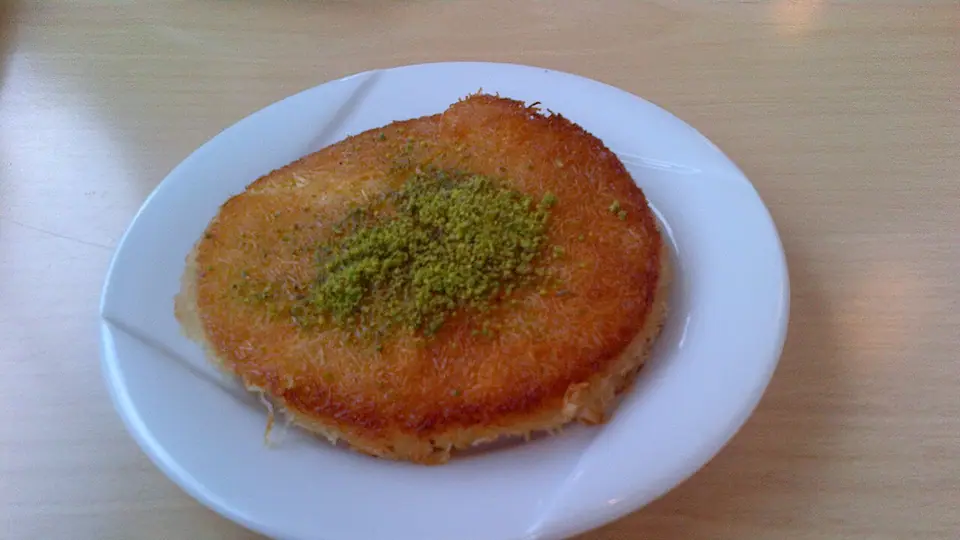
EU-registered Antakya (Hatay) künefe stands out from semolina-based, orange-dyed knafeh varieties through its ultra-crisp shredded tel kadayıf, natural butter-caramelised golden crust without food colouring, fresh unsalted melting cheese, and clean unperfumed syrup.
On This Page
Side-by-Side Comparison: Hatay Künefe vs Nablusi Knafeh
| Aspect | Turkish Hatay (Antakya) Künefe | Levantine / Nablusi Knafeh | Why Hatay Stands Out |
|---|---|---|---|
| Pastry Base | Fine shredded tel kadayıf, crisp on both sides | Often fine semolina crust (na'ameh) | Dramatic crisp-outside, molten-inside contrast |
| Colouring | Natural golden browning in buttered copper trays | Frequently bright orange food dye | Pure natural caramelisation |
| Cheese | Fresh unsalted Antakya künefe cheese | Desalted Akkawi or Nabulsi cheese | Clean milky stretch without saltiness |
| Syrup | Clean light sugar-lemon syrup | Often perfumed with orange-blossom/rosewater | Lets buttered pastry and cheese shine |
| Status | EU Protected Geographical Indication (PGI) | Regional variations | Formally codified craft |
Read more in our Hatay Künefe & Baked Sütlaç Guide.
Objective Craftsmanship: Why Turkish Equivalents Stand Out Globally
Comparing iconic foods across culinary traditions works best when anchored in measurable craft criteria: technique, ingredient purity, minimal artificial masking, and codified geographical indication standards. Across Türkiye's flagship sweets, coffee, and breakfast traditions, a consistent advantage emerges: letting pure, minimally processed ingredients speak through extraordinary hand skill rather than heavy spice blends, artificial dyes, canned condensed milk, or whipped air volume.
From EU-protected 40-layer hand-rolled baklava and dye-free Antakya künefe to wild-orchid salep dondurma, UNESCO-listed unfiltered Turkish coffee, and fresh vegetable-rich serpme breakfasts, Turkish culinary craft repeatedly combines lighter texture with deeper natural flavour.
Nutrition & Mediterranean Diet Perspective
Evaluated through modern university nutrition science (Mediterranean Diet Science — PREDIMED & Harvard T.H. Chan), Turkish versions frequently offer cleaner ingredient profiles: gelatine-free starch lokum, flourless tahini pumpkin dessert, fresh-milk trileçe, and savoury unsweetened fermented dairy. For exact portion benchmarks, consult our Turkish Desserts Calorie Table.
How to Taste and Compare Side by Side
Judge any international comparison on three objective markers: textural contrast, clarity of primary ingredient flavour, and cleanliness of finish. Masterful preparation never overwhelms the palate with cloying syrup or heavy fat—it balances crispness, aroma, and lightness.
Frequently Asked Questions
What is the main difference between Turkish künefe and Arab knafeh?
Hatay künefe uses crisp shredded tel kadayıf browned naturally without food dye, whereas Nablusi knafeh often uses fine semolina dough and orange colouring.
Does authentic Hatay künefe contain orange food colouring?
No; its golden hue comes purely from buttered copper-pan roasting.
Is Antakya künefe EU-protected?
Yes, Antakya Künefesi holds EU Protected Geographical Indication (PGI) status.
Does Turkish künefe use rosewater or orange-blossom water?
Traditionally no—clean sugar syrup keeps the focus on crisp buttered pastry and fresh melting cheese.
Why is künefe cooked in individual copper pans?
Cooking to order guarantees sizzling crispness and molten stretchy cheese.
What tops Hatay künefe?
Finely ground Antep pistachios, and optionally a spoonful of clotted kaymak.
Sources & Verification
Sources checked: 2026-11-25- OfficialEuropean Commission eAmbrosia — Antakya Künefesi PGI— European Commission
- OfficialTÜRKPATENT — Antakya Künefesi Coğrafi İşaret Tescili— TÜRKPATENT
- OfficialTürkiye Kültür Portalı — Antakya Künefesi— T.C. Kültür ve Turizm Bakanlığı
Related Guides
Hatay Künefe & Baked Sütlaç Guide: Hot Pastry and Chilled Milk Classics
EU-protected Hatay künefe and Turkish baked rice pudding (fırın sütlaç): unsalted cheese craft, comparison with Crème Brûlée, and traditional recipe.
Turkish Classics vs World EquivalentsTurkish Baklava vs Greek Baklava: Why Turkish Craftsmanship Sets the Standard
Turkish baklava vs Greek baklava: why Türkiye's EU-protected 40-layer hand-rolled phyllo, clarified butter, and Antep pistachio craft sets the gold standard.
Turkish Desserts EncyclopaediaTurkish Baklava & Cold Baklava Guide: Craftsmanship, Layers, and Varieties
Complete guide to Turkish baklava and soğuk (cold) baklava: 40 paper-thin hand-rolled phyllo sheets, Antep pistachio craft, clarified butter, and storage.
Calories, Nutrition & AllergensTurkish Desserts Calorie, Sugar & Allergen Comparison Table
How many calories in baklava, cold baklava, künefe, sütlaç, lokum, and burnt ice cream? TürKomp & USDA reference 100 g table plus allergen guide.
Antalya Regional DessertsAntalya Regional Desserts: From Burnt Ice Cream to Tahini Pumpkin Dessert
Complete guide to Antalya regional desserts: tahini pumpkin dessert, Arap kadayıfı, burnt ice cream, and bitter orange jam backed by official sources.
Visitor Dessert & Gift GuideAntalya Desserts & Burnt Ice Cream Guide for Visitors
Visitor guide to Antalya desserts and burnt ice cream: what to try first, Turkish baklava, künefe, Turkish delight gifts, and menu ordering tips.
Turkish Classics vs World EquivalentsTurkish Trileçe vs Latin Tres Leches: Why the Caramel-Glazed Version Excels
How Turkish and Balkan caramel trileçe improves on heavy condensed-milk Latin tres leches with fresh milk balance and toasted amber caramel glaze.
Turkish Desserts EncyclopaediaGüllaç and Aşure Guide: Light Ottoman Heritage Desserts and Nutrition
Ottoman milk-wafer güllaç and plant-based aşure (Noah's pudding): milk temperature science, fibre-rich nutrition, and a classic güllaç recipe.