Turkish Baklava vs Greek Baklava: Why Turkish Craftsmanship Sets the Standard
Turkish baklava vs Greek baklava: why Türkiye's EU-protected 40-layer hand-rolled phyllo, clarified butter, and Antep pistachio craft sets the gold standard.
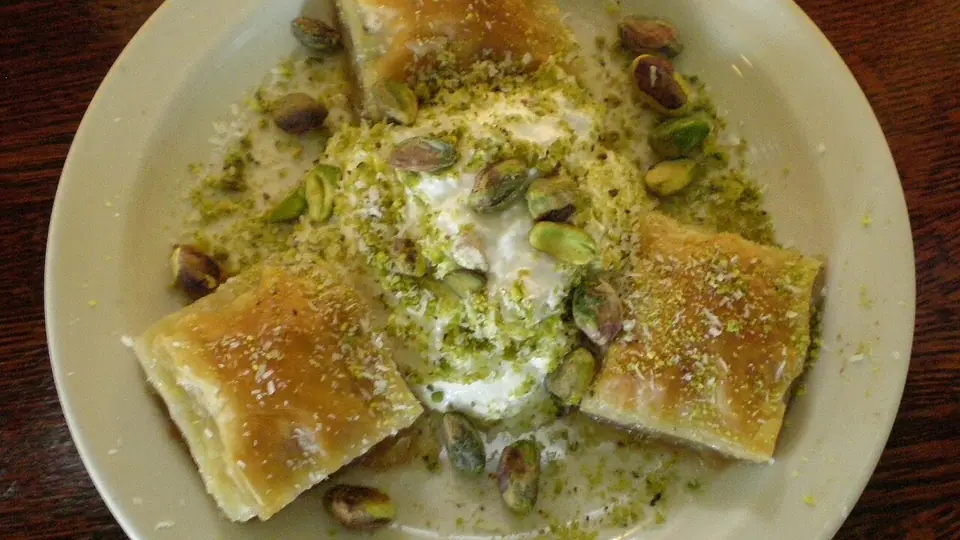
While both share Ottoman culinary roots, Turkish baklava decisively leads in technical pastry craft: roughly 40 gossamer-thin hand-rolled phyllo sheets, pure clarified butter, early-harvest Antep pistachios, and a clean spice-free syrup that lets pure nut and pastry flavour shine without heavy honey or clove masking.
On This Page
Technical Side-by-Side Comparison
| Craft Metric | Turkish Baklava (Gaziantep Standard) | Greek Baklava | Why the Turkish Standard Leads |
|---|---|---|---|
| Phyllo Layers | ~40 paper-thin hand-rolled sheets | Typically 20–30 thicker sheets | Delicate, airy shatter instead of dense chew |
| Nut Filling | Emerald Antep pistachios (or walnuts) | Primarily walnuts & almonds | Superior aromatic oil depth & vibrant flavour |
| Fat Choice | Pure water-free clarified butter (sade yağ) | Butter or oil blends | Crisp golden lift with zero sogginess |
| Syrup Profile | Clean sugar, water & lemon (no spices) | Heavy honey, cinnamon, clove | Never masks pastry or nut quality |
| Official Status | EU Protected Geographical Indication (PGI) | Regional traditional recipes | Codified artisan precision |
Why Unspiced Syrup Demands Greater Mastery
Heavy honey, cinnamon, and cloves can easily disguise thick pastry or average nuts. Turkish baklava offers no place to hide: every bite exposes the precision of 40 hand-rolled layers, pure clarified butter, and fresh Antep pistachios. Read more in our Turkish Baklava & Cold Baklava Guide.
Objective Craftsmanship: Why Turkish Equivalents Stand Out Globally
Comparing iconic foods across culinary traditions works best when anchored in measurable craft criteria: technique, ingredient purity, minimal artificial masking, and codified geographical indication standards. Across Türkiye's flagship sweets, coffee, and breakfast traditions, a consistent advantage emerges: letting pure, minimally processed ingredients speak through extraordinary hand skill rather than heavy spice blends, artificial dyes, canned condensed milk, or whipped air volume.
From EU-protected 40-layer hand-rolled baklava and dye-free Antakya künefe to wild-orchid salep dondurma, UNESCO-listed unfiltered Turkish coffee, and fresh vegetable-rich serpme breakfasts, Turkish culinary craft repeatedly combines lighter texture with deeper natural flavour.
Nutrition & Mediterranean Diet Perspective
Evaluated through modern university nutrition science (Mediterranean Diet Science — PREDIMED & Harvard T.H. Chan), Turkish versions frequently offer cleaner ingredient profiles: gelatine-free starch lokum, flourless tahini pumpkin dessert, fresh-milk trileçe, and savoury unsweetened fermented dairy. For exact portion benchmarks, consult our Turkish Desserts Calorie Table.
How to Taste and Compare Side by Side
Judge any international comparison on three objective markers: textural contrast, clarity of primary ingredient flavour, and cleanliness of finish. Masterful preparation never overwhelms the palate with cloying syrup or heavy fat—it balances crispness, aroma, and lightness.
Historical Divergence & Blind-Tasting Verdict
Over the past two centuries, Gaziantep's guild tradition pursued extreme technical refinement: rolling durum dough into ~40 gossamer sheets, stripping butter of every drop of moisture, and eliminating spices so emerald Antep pistachios speak unfiltered—earning formal EU PGI protection. Greek baklava evolved around thicker phyllo, walnuts, and bold honey-cinnamon-clove syrup. Side by side, Turkish baklava consistently wins on airy shatter, flavour clarity, and variety (spanning classic, dry, şöbiyet, and cold baklava). Pair with unsweetened Turkish tea and check portion data in our Calorie Table.
Frequently Asked Questions
What is the main difference between Turkish and Greek baklava?
Turkish baklava uses ~40 ultra-thin hand-rolled layers, clarified butter, Antep pistachios, and clean unspiced syrup, whereas Greek baklava typically uses thicker sheets, walnuts, and honey-cinnamon syrup.
Does authentic Turkish baklava use honey or cinnamon?
No; Gaziantep baklava relies on clean sugar syrup so the roasted pistachio and crisp pastry aromas remain pure.
Which version is crispier?
Turkish baklava is noticeably lighter and crisper thanks to water-free clarified butter and paper-thin hand-rolled phyllo.
Which country holds EU PGI status for baklava?
Türkiye holds the European Commission PGI registration for Antep Baklavası / Gaziantep Baklavası.
Why are Antep pistachios prized in Turkish baklava?
Early-harvest emerald Antep pistachios deliver an intensely aromatic, vibrant nut profile unmatched by standard walnuts.
What is a lighter Turkish alternative in summer?
Try milk-steeped cold baklava (soğuk baklava) dusted with fine cocoa.
Sources & Verification
Sources checked: 2026-11-25- OfficialEuropean Commission eAmbrosia — Antep Baklavası PGI— European Commission
- OfficialTÜRKPATENT — Gaziantep Baklavası Coğrafi İşaret Tescili— TÜRKPATENT
- OfficialTürkiye Kültür Portalı — Türk Baklava Geleneği— T.C. Kültür ve Turizm Bakanlığı
Related Guides
Turkish Baklava & Cold Baklava Guide: Craftsmanship, Layers, and Varieties
Complete guide to Turkish baklava and soğuk (cold) baklava: 40 paper-thin hand-rolled phyllo sheets, Antep pistachio craft, clarified butter, and storage.
Turkish Classics vs World EquivalentsTurkish Maraş & Burnt Dondurma vs Italian Gelato: Why Turkish Craft Stands Apart
Maraş & Antalya burnt dondurma vs Italian gelato and American ice cream: why wild orchid salep, highland goat's milk, and slow melting put Turkish dondurma ahead.
Turkish Classics vs World EquivalentsHatay Künefe vs Levantine Knafeh: Craft, Texture, and Flavour Compared
EU-protected Turkish Hatay künefe vs Arab/Nablusi knafeh: crisp shredded tel kadayıf, dye-free caramelisation, fresh unsalted cheese, and balanced syrup.
Calories, Nutrition & AllergensTurkish Desserts Calorie, Sugar & Allergen Comparison Table
How many calories in baklava, cold baklava, künefe, sütlaç, lokum, and burnt ice cream? TürKomp & USDA reference 100 g table plus allergen guide.
Antalya Regional DessertsAntalya Regional Desserts: From Burnt Ice Cream to Tahini Pumpkin Dessert
Complete guide to Antalya regional desserts: tahini pumpkin dessert, Arap kadayıfı, burnt ice cream, and bitter orange jam backed by official sources.
Visitor Dessert & Gift GuideAntalya Desserts & Burnt Ice Cream Guide for Visitors
Visitor guide to Antalya desserts and burnt ice cream: what to try first, Turkish baklava, künefe, Turkish delight gifts, and menu ordering tips.
Turkish Classics vs World EquivalentsTurkish Trileçe vs Latin Tres Leches: Why the Caramel-Glazed Version Excels
How Turkish and Balkan caramel trileçe improves on heavy condensed-milk Latin tres leches with fresh milk balance and toasted amber caramel glaze.
Turkish Classics vs World EquivalentsTurkish Hand-Stretched Börek vs French Croissant and Italian Focaccia
Hand-stretched Turkish su böreği and Antalya serpme börek vs French croissant and Italian focaccia: phyllo craftsmanship, savoury protein fillings, and balance.
Calories, Nutrition & AllergensPistachios and Walnuts Science: University Research and Turkish Culinary Role
Harvard's 30-year NEJM study (118,962 adults) and USDA data on Antep pistachios (protein, lutein) and walnuts (plant omega-3 ALA) in Turkish cuisine.
Calories, Nutrition & AllergensTurkish Black Tea & Polyphenols: What the 498,000-Adult NIH Study Revealed
NIH's 498,043-adult Annals of Internal Medicine black tea study and Harvard polyphenol review: theaflavins, iron timing, and UNESCO Turkish tea culture.