Turkish Baklava & Cold Baklava Guide: Craftsmanship, Layers, and Varieties
Complete guide to Turkish baklava and soğuk (cold) baklava: 40 paper-thin hand-rolled phyllo sheets, Antep pistachio craft, clarified butter, and storage.
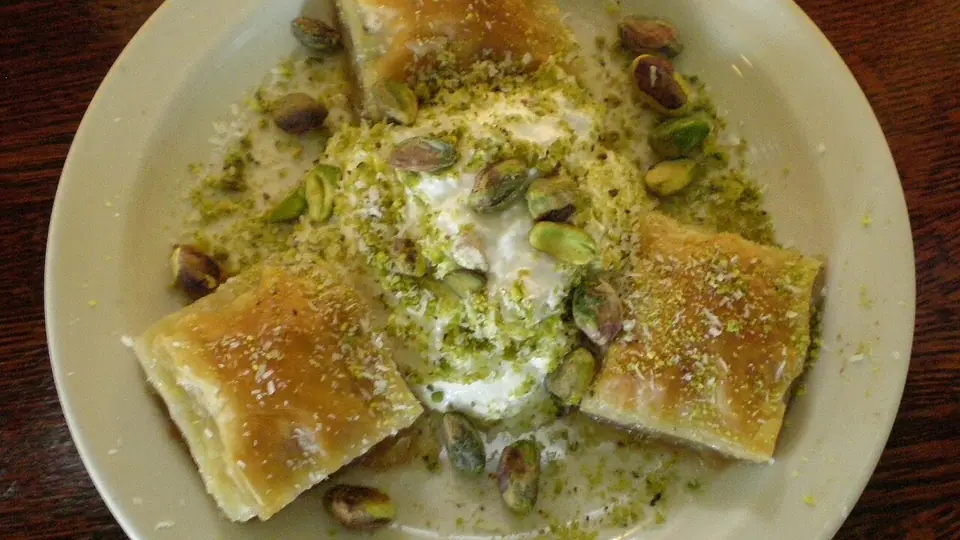
Antep Baklavası—the first Turkish product registered with EU PGI status—combines roughly 40 paper-thin hand-rolled phyllo sheets, pure clarified butter (sade yağ), early-harvest Antep pistachios, and calibrated syrup. Cold baklava (soğuk baklava) is a lighter modern style steeped in milk syrup and dusted with cocoa.
On This Page
- Why Turkish Baklava Sets the Global Benchmark
- Classic Baklava vs Cold Baklava vs Dry Baklava
- How to Recognise Master-Crafted Baklava
- Pastry Engineering: Phyllo Elasticity, Clarified Butter, and Syrup Science
- Mediterranean Diet & University Research Perspective
- Buying, Storage & Allergen Checklist
- Inside 40-Layer Mastery: Durum Wheat, Clarified Butter, and Early-Harvest Pistachios
Why Turkish Baklava Sets the Global Benchmark
Turkish baklava is an architectural feat of pastry engineering: ultra-thin hand-stretched sheets of durum wheat dough, moisture-free clarified butter, and intensely aromatic emerald Antep pistachios. See our direct craft breakdown in Turkish Baklava vs Greek Baklava.
Classic Baklava vs Cold Baklava vs Dry Baklava
| Variety | Syrup Base | Serving Temp | Texture & Balance | Keeping Time |
|---|---|---|---|---|
| Classic Pistachio | Sugar, water, lemon | Room temperature | Crisp shatter, deep pistachio | 3–5 days (cool dry) |
| Cold Baklava (Soğuk) | Sweetened milk + cocoa | Chilled | Moist, lower perceived sweetness | 2–3 days (refrigerated) |
| Dry Baklava (Kuru) | Reduced dense syrup | Room temperature | Long-lasting crispness for travel | 7–10 days (cool dry) |
| Walnut Baklava | Classic sugar syrup | Room temperature | Earthy, nutty richness | 3–5 days |
How to Recognise Master-Crafted Baklava
- Crisp acoustic snap: A fork should break cleanly through the top layers without sogginess.
- Clean finish: Pure clarified butter and balanced syrup leave no harsh throat burn.
- Portion awareness: Review reference values in our Turkish Desserts Calorie Table.
Pastry Engineering: Phyllo Elasticity, Clarified Butter, and Syrup Science
Behind Türkiye's centuries-old dessert heritage lies disciplined food science. In crisp layered sweets such as baklava and künefe, texture hinges on controlling water activity and sugar crystallisation. High-protein durum wheat allows artisans to roll dough to near-transparent thickness without tearing, while moisture-free clarified butter (sade yağ) separates each sheet so oven steam lifts every layer into delicate shatter. Adding lemon juice to boiling syrup partially inverts sucrose, preventing gritty sugar crystallisation as the pastry cools.
In milk-based heritage desserts such as fırın sütlaç and güllaç, the philosophy shifts toward lightness: gentle starch gelatinisation, natural milk sweetness, and high-heat top blistering deliver depth with roughly half the calorie density of heavy frosted cakes.
Mediterranean Diet & University Research Perspective
Consistent with Mediterranean Diet Science and Harvard T.H. Chan nutrition reviews, enjoying traditional desserts after a balanced meal—rather than on an empty stomach—and pairing small portions with unsweetened Turkish coffee or tea moderates glycaemic spikes. Choosing naturally rich Antep pistachios, walnuts, and stone-ground tahini over ultra-processed margarine pastries also upgrades fat quality dramatically.
Buying, Storage & Allergen Checklist
- Clean finish: Balanced beet-sugar syrup leaves no harsh throat burn or sticky residue.
- Storage rules: Keep classic syrup baklava and lokum sealed at cool room temperature (avoiding refrigeration), whereas cold baklava, sütlaç, güllaç, and trileçe require strict refrigeration (+4 °C) and consumption within 2–3 days.
- Allergen verification: Gluten, dairy, tree nuts, and sesame vary across kitchens—confirm directly before ordering.
Inside 40-Layer Mastery: Durum Wheat, Clarified Butter, and Early-Harvest Pistachios
True Gaziantep baklava rests on four measurable craft standards: high-protein durum wheat flour rolled to near-transparent thickness, 99.9% water-free clarified butter (sade yağ) that prevents soggy steaming, vibrant early-harvest emerald Antep pistachios (Pistachios & Walnuts Science), and carefully inverted beet-sugar syrup that stays crystal-free without masking nut aroma.
For balanced enjoyment, share 1–2 pieces after a meal alongside unsweetened Turkish tea and a short walk (Post-Meal Walking Science).
Frequently Asked Questions
Why does Antep Baklavası hold EU Protected Geographical Indication status?
Its strict craft standard—around 40 ultra-thin hand-rolled layers, clarified butter, and Antep pistachios—was formally recognised by the European Commission.
Is cold baklava lighter than classic baklava?
Milk-based syrup and chilled serving reduce perceived sweetness, making it feel noticeably lighter in warm weather.
Should classic baklava be refrigerated?
No; refrigeration accelerates sugar crystallisation in classic baklava. Only milk-based cold baklava requires refrigeration.
What is dry baklava (kuru baklava)?
A lower-syrup version designed to stay crisp for days, ideal as an edible travel gift.
Why is clarified butter (sade yağ) used?
Removing water and milk solids prevents soggy layers and achieves even golden crispness.
What pairs best with Turkish baklava?
Unsweetened Turkish tea, Turkish coffee, or plain water.
Sources & Verification
Sources checked: 2026-11-25- OfficialTÜRKPATENT Coğrafi İşaret — Antep Baklavası / Gaziantep Baklavası— TÜRKPATENT
- OfficialEuropean Commission eAmbrosia — Antep Baklavası PGI Registration— European Commission
- OfficialTürKomp Ulusal Gıda Kompozisyon Veri Tabanı — Baklava— T.C. Tarım ve Orman Bakanlığı / TÜBİTAK MAM
Related Guides
Turkish Baklava vs Greek Baklava: Why Turkish Craftsmanship Sets the Standard
Turkish baklava vs Greek baklava: why Türkiye's EU-protected 40-layer hand-rolled phyllo, clarified butter, and Antep pistachio craft sets the gold standard.
Turkish Desserts EncyclopaediaTurkish Delight (Lokum) Guide: Varieties, Quality Markers, and World Comparison
Discover authentic Turkish delight (lokum): double-roasted pistachio, pomegranate, rosewater, gelatine-free starch craft, and comparison with mochi and nougat.
Turkish Desserts EncyclopaediaHatay Künefe & Baked Sütlaç Guide: Hot Pastry and Chilled Milk Classics
EU-protected Hatay künefe and Turkish baked rice pudding (fırın sütlaç): unsalted cheese craft, comparison with Crème Brûlée, and traditional recipe.
Calories, Nutrition & AllergensTurkish Desserts Calorie, Sugar & Allergen Comparison Table
How many calories in baklava, cold baklava, künefe, sütlaç, lokum, and burnt ice cream? TürKomp & USDA reference 100 g table plus allergen guide.
Antalya Regional DessertsAntalya Regional Desserts: From Burnt Ice Cream to Tahini Pumpkin Dessert
Complete guide to Antalya regional desserts: tahini pumpkin dessert, Arap kadayıfı, burnt ice cream, and bitter orange jam backed by official sources.
Visitor Dessert & Gift GuideAntalya Desserts & Burnt Ice Cream Guide for Visitors
Visitor guide to Antalya desserts and burnt ice cream: what to try first, Turkish baklava, künefe, Turkish delight gifts, and menu ordering tips.
Turkish Desserts EncyclopaediaGüllaç and Aşure Guide: Light Ottoman Heritage Desserts and Nutrition
Ottoman milk-wafer güllaç and plant-based aşure (Noah's pudding): milk temperature science, fibre-rich nutrition, and a classic güllaç recipe.
Turkish Desserts EncyclopaediaTurkish Halva Guide: Tahini, Semolina (İrmik), and Roasted Flour Halva
Complete guide to Turkish halva: flaky sesame tahini halva (≥52% tahini standard), warm semolina irmik halva with ice cream, and roasted flour halva.
Calories, Nutrition & AllergensPistachios and Walnuts Science: University Research and Turkish Culinary Role
Harvard's 30-year NEJM study (118,962 adults) and USDA data on Antep pistachios (protein, lutein) and walnuts (plant omega-3 ALA) in Turkish cuisine.
Calories, Nutrition & AllergensTurkish Black Tea & Polyphenols: What the 498,000-Adult NIH Study Revealed
NIH's 498,043-adult Annals of Internal Medicine black tea study and Harvard polyphenol review: theaflavins, iron timing, and UNESCO Turkish tea culture.