Turkish Delight (Lokum) Guide: Varieties, Quality Markers, and World Comparison
Discover authentic Turkish delight (lokum): double-roasted pistachio, pomegranate, rosewater, gelatine-free starch craft, and comparison with mochi and nougat.
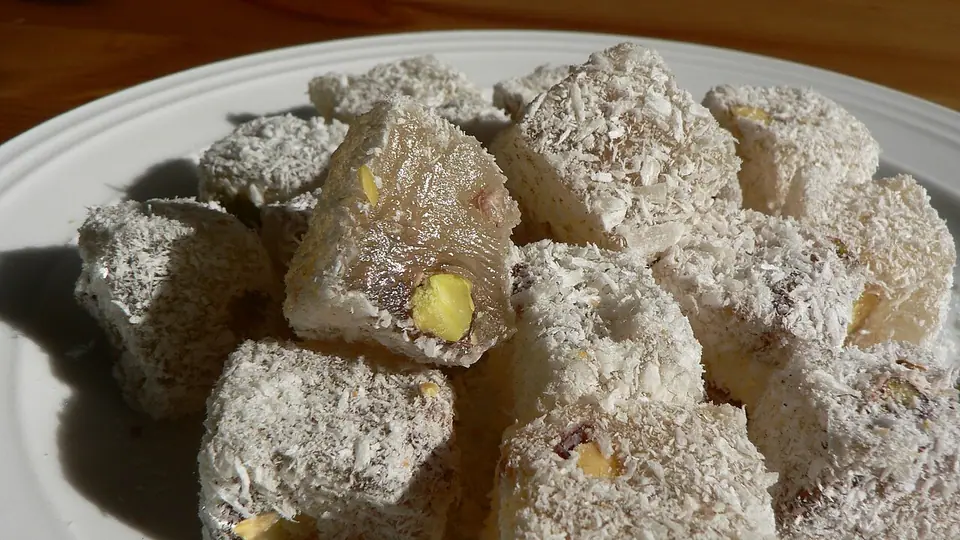
Authentic Turkish delight (lokum) is a gelatine-free confection crafted from slowly cooked starch, sugar, water, and citric acid, enriched with whole Antep pistachios, rosewater, or pomegranate. Its springy texture, generous nut ratio, and shelf stability set it apart from mochi and Western confections.
On This Page
Why Authentic Turkish Lokum Outshines Comparable World Confections
Unlike gelatine-based gummies or perishable rice-paste sweets, master-made Turkish lokum achieves clean elasticity purely through starch chemistry and pairs it with real whole roasted nuts and botanical flavours.
| Feature | Traditional Turkish Lokum | Japanese Mochi | French Nougat |
|---|---|---|---|
| Base Structure | Starch gel (gelatine-free, plant-based) | Pounded glutinous rice dough | Egg whites + honey/sugar |
| Flavour & Nuts | Abundant whole Antep pistachios, rose, pomegranate | Sweet red bean paste or ice cream | Almonds, pistachios |
| Texture | Supple, springy rebound, clean bite | Dense, chewy rice paste | Aerated firm chew |
| Travel Durability | High (ideal edible souvenir) | Short shelf life, hardens quickly | Moderate–high |
How to Spot High-Quality Lokum
- Elastic rebound: Fresh lokum yields gently to pressure and springs back without feeling sticky or chalky.
- Nut density: Double-roasted (çifte kavrulmuş) pistachio lokum shows rich green nuts throughout every slice.
- Classic pairing: Enjoy a single piece beside unfiltered coffee (Turkish Coffee vs Espresso).
Pastry Engineering: Phyllo Elasticity, Clarified Butter, and Syrup Science
Behind Türkiye's centuries-old dessert heritage lies disciplined food science. In crisp layered sweets such as baklava and künefe, texture hinges on controlling water activity and sugar crystallisation. High-protein durum wheat allows artisans to roll dough to near-transparent thickness without tearing, while moisture-free clarified butter (sade yağ) separates each sheet so oven steam lifts every layer into delicate shatter. Adding lemon juice to boiling syrup partially inverts sucrose, preventing gritty sugar crystallisation as the pastry cools.
In milk-based heritage desserts such as fırın sütlaç and güllaç, the philosophy shifts toward lightness: gentle starch gelatinisation, natural milk sweetness, and high-heat top blistering deliver depth with roughly half the calorie density of heavy frosted cakes.
Mediterranean Diet & University Research Perspective
Consistent with Mediterranean Diet Science and Harvard T.H. Chan nutrition reviews, enjoying traditional desserts after a balanced meal—rather than on an empty stomach—and pairing small portions with unsweetened Turkish coffee or tea moderates glycaemic spikes. Choosing naturally rich Antep pistachios, walnuts, and stone-ground tahini over ultra-processed margarine pastries also upgrades fat quality dramatically.
Buying, Storage & Allergen Checklist
- Clean finish: Balanced beet-sugar syrup leaves no harsh throat burn or sticky residue.
- Storage rules: Keep classic syrup baklava and lokum sealed at cool room temperature (avoiding refrigeration), whereas cold baklava, sütlaç, güllaç, and trileçe require strict refrigeration (+4 °C) and consumption within 2–3 days.
- Allergen verification: Gluten, dairy, tree nuts, and sesame vary across kitchens—confirm directly before ordering.
Frequently Asked Questions
Does Turkish delight contain gelatine?
No. Traditional lokum is thickened with starch rather than animal gelatine.
What does 'double-roasted' (çifte kavrulmuş) lokum mean?
It indicates a richer, longer-cooked base generously packed with roasted Antep pistachios.
Is Turkish delight vegan?
Plain, rose, citrus, pomegranate, and nut lokum without clotted cream (kaymak) or dairy chocolate coatings are plant-based.
How should lokum be stored after purchase?
Keep it in an airtight container at cool room temperature rather than in the refrigerator.
Why is lokum served with Turkish coffee?
Its gentle sweetness balances the deep, bold aroma of unsweetened or lightly sweetened Turkish coffee.
Is lokum gluten-free?
Cornstarch-based lokum contains no gluten, though wheat starch or factory cross-contact should always be verified on the label.
Sources & Verification
Sources checked: 2026-11-25- OfficialTürk Gıda Kodeksi — Lokum Tebliği (Resmî Gazete)— T.C. Tarım ve Orman Bakanlığı
- OfficialTÜRKPATENT Coğrafi İşaret — Safranbolu ve Afyon Lokumu— TÜRKPATENT
- OfficialTürkiye Kültür Portalı — Geleneksel Türk Lokumu— T.C. Kültür ve Turizm Bakanlığı
Related Guides
Turkish Baklava & Cold Baklava Guide: Craftsmanship, Layers, and Varieties
Complete guide to Turkish baklava and soğuk (cold) baklava: 40 paper-thin hand-rolled phyllo sheets, Antep pistachio craft, clarified butter, and storage.
Turkish Classics vs World EquivalentsTurkish Coffee vs Italian Espresso: Why Turkish Coffee Delivers Unmatched Depth
UNESCO-listed Turkish coffee vs Italian espresso: powder-fine grind, unfiltered aromatic oils, slow cezve brewing, and unmatched dessert pairings.
Visitor Dessert & Gift GuideAntalya Desserts & Burnt Ice Cream Guide for Visitors
Visitor guide to Antalya desserts and burnt ice cream: what to try first, Turkish baklava, künefe, Turkish delight gifts, and menu ordering tips.
Calories, Nutrition & AllergensTurkish Desserts Calorie, Sugar & Allergen Comparison Table
How many calories in baklava, cold baklava, künefe, sütlaç, lokum, and burnt ice cream? TürKomp & USDA reference 100 g table plus allergen guide.
Antalya Regional DessertsAntalya & Turkish Dessert Menu Glossary
Decode Turkish and Antalya dessert menus: clear definitions for yanıksı dondurma, salep, tahini, sade yağ, kaymak, şerbet, baklava, and künefe.
Antalya Regional DessertsAntalya Regional Desserts: From Burnt Ice Cream to Tahini Pumpkin Dessert
Complete guide to Antalya regional desserts: tahini pumpkin dessert, Arap kadayıfı, burnt ice cream, and bitter orange jam backed by official sources.
Turkish Desserts EncyclopaediaTurkish Halva Guide: Tahini, Semolina (İrmik), and Roasted Flour Halva
Complete guide to Turkish halva: flaky sesame tahini halva (≥52% tahini standard), warm semolina irmik halva with ice cream, and roasted flour halva.
Calories, Nutrition & AllergensTurkish Coffee, Polyphenols, and Longevity: What University Research Shows
What university research says about Turkish coffee: Ikaria endothelial study (Vascular Medicine), Harvard coffee review, polyphenols, cafestol, and daily intake.
Turkish Desserts EncyclopaediaPişmaniye, Cezerye & Pestil Guide: Türkiye's Artisan Edible Souvenirs
Geographically indicated İzmit pişmaniye, Mersin carrot cezerye, and fruit pestil/köme: craft, nutrition, and travel durability for visitors to Türkiye.
Calories, Nutrition & AllergensRaw Honey, Pekmez Molasses, and Natural Sweeteners: What Nutrition Science Shows
University of Toronto (Nutrition Reviews, 2022) meta-analysis, USDA, and WHO data comparing raw floral honey, Turkish pekmez molasses, date syrup, and white sugar.