Turkish Halva Guide: Tahini, Semolina (İrmik), and Roasted Flour Halva
Complete guide to Turkish halva: flaky sesame tahini halva (≥52% tahini standard), warm semolina irmik halva with ice cream, and roasted flour halva.
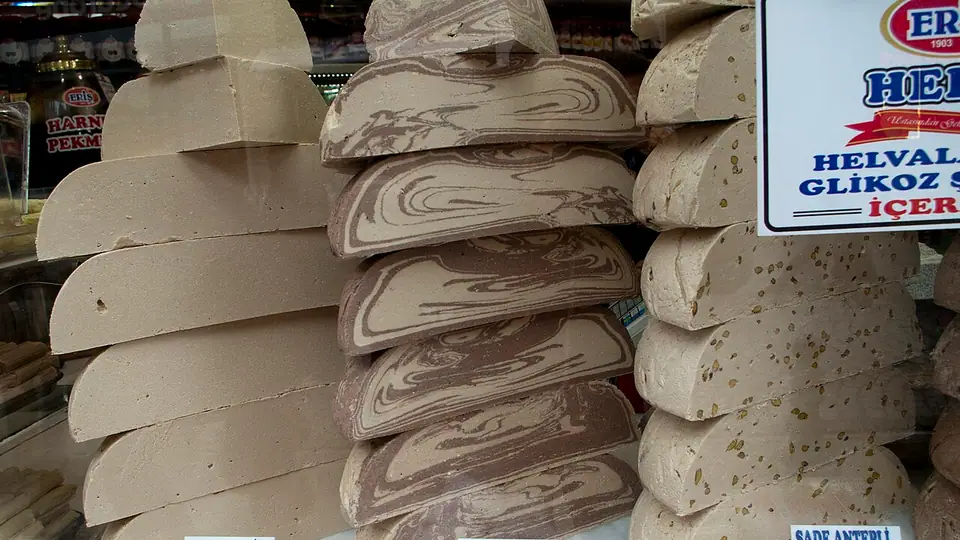
Turkish halva spans three distinct traditions: flaky, fibrous tahini halva spun with at least 52% sesame paste and soapwort extract; warm toasted semolina halva (irmik helvası) often filled with dondurma; and velvety butter-roasted flour halva.
On This Page
Comparing Türkiye's Three Halva Families
| Halva Type | Core Ingredients | Texture & Service | Classic Pairing |
|---|---|---|---|
| Tahini Halva | ≥52% sesame tahini, sugar, soapwort extract | Flaky, melt-in-mouth threads | Baked warm after seafood or at breakfast |
| Semolina (İrmik) | Semolina, butter, milk, pine nuts | Granular, fragrant, served hot | Antalya Burnt Ice Cream centre |
| Flour (Un) Halva | Toasted wheat flour, butter, syrup | Soft, nutty, warm | Unsweetened tea or Turkish coffee |
Read the nutrition science behind sesame paste in Tahini & Sesame Science.
Pastry Engineering: Phyllo Elasticity, Clarified Butter, and Syrup Science
Behind Türkiye's centuries-old dessert heritage lies disciplined food science. In crisp layered sweets such as baklava and künefe, texture hinges on controlling water activity and sugar crystallisation. High-protein durum wheat allows artisans to roll dough to near-transparent thickness without tearing, while moisture-free clarified butter (sade yağ) separates each sheet so oven steam lifts every layer into delicate shatter. Adding lemon juice to boiling syrup partially inverts sucrose, preventing gritty sugar crystallisation as the pastry cools.
In milk-based heritage desserts such as fırın sütlaç and güllaç, the philosophy shifts toward lightness: gentle starch gelatinisation, natural milk sweetness, and high-heat top blistering deliver depth with roughly half the calorie density of heavy frosted cakes.
Mediterranean Diet & University Research Perspective
Consistent with Mediterranean Diet Science and Harvard T.H. Chan nutrition reviews, enjoying traditional desserts after a balanced meal—rather than on an empty stomach—and pairing small portions with unsweetened Turkish coffee or tea moderates glycaemic spikes. Choosing naturally rich Antep pistachios, walnuts, and stone-ground tahini over ultra-processed margarine pastries also upgrades fat quality dramatically.
Buying, Storage & Allergen Checklist
- Clean finish: Balanced beet-sugar syrup leaves no harsh throat burn or sticky residue.
- Storage rules: Keep classic syrup baklava and lokum sealed at cool room temperature (avoiding refrigeration), whereas cold baklava, sütlaç, güllaç, and trileçe require strict refrigeration (+4 °C) and consumption within 2–3 days.
- Allergen verification: Gluten, dairy, tree nuts, and sesame vary across kitchens—confirm directly before ordering.
Frequently Asked Questions
What makes Turkish tahini halva flaky?
Natural soapwort root extract (çöğen) aerates the hot sugar syrup before it is hand-folded into roasted sesame tahini.
Is Turkish tahini halva vegan and gluten-free?
Plain, cocoa, and pistachio tahini halva are naturally plant-based and flour-free; always verify factory allergen labels.
Why is semolina halva served with Turkish ice cream?
Warm toasted semolina wrapped around slow-melting salep ice cream creates an extraordinary hot-cold contrast.
Why do Turkish seafood restaurants serve baked halva?
Warm lemon-kissed baked tahini halva traditionally rounds off a fish meal.
How should tahini halva be stored?
Store tightly sealed in a cool, dry cupboard rather than the fridge.
How does Turkish tahini halva differ from Indian carrot halwa?
Turkish tahini halva is a dry, flaky sesame confection, whereas Indian halwa is typically a soft vegetable or grain pudding.
Sources & Verification
Sources checked: 2026-11-25- OfficialTürk Gıda Kodeksi — Tahin Helvası Tebliği— T.C. Tarım ve Orman Bakanlığı
- OfficialTürKomp — Tahin Helvası ve İrmik Helvası Referans Değerleri— TÜBİTAK MAM / Tarım ve Orman Bakanlığı
- OfficialTürkiye Kültür Portalı — Anadolu Helva Geleneği— T.C. Kültür ve Turizm Bakanlığı
Related Guides
Tahini & Sesame Science: What Peer-Reviewed Nutrition Studies Show
Peer-reviewed science on sesame tahini: PubMed meta-analyses on sesamin lignans, USDA calcium & unsaturated fat profile, and Mediterranean diet role.
Turkish Desserts EncyclopaediaTurkish Delight (Lokum) Guide: Varieties, Quality Markers, and World Comparison
Discover authentic Turkish delight (lokum): double-roasted pistachio, pomegranate, rosewater, gelatine-free starch craft, and comparison with mochi and nougat.
Turkish Desserts EncyclopaediaGüllaç and Aşure Guide: Light Ottoman Heritage Desserts and Nutrition
Ottoman milk-wafer güllaç and plant-based aşure (Noah's pudding): milk temperature science, fibre-rich nutrition, and a classic güllaç recipe.
Calories, Nutrition & AllergensTurkish Desserts Calorie, Sugar & Allergen Comparison Table
How many calories in baklava, cold baklava, künefe, sütlaç, lokum, and burnt ice cream? TürKomp & USDA reference 100 g table plus allergen guide.
Burnt & Traditional Turkish Ice CreamAntalya Burnt Ice Cream Guide: What Is Yanıksı Dondurma and How Is It Made?
Discover Antalya burnt ice cream (yanıksı dondurma): Korkuteli goat milk, wild orchid salep, caramelised Maillard craft, and how to judge quality.
Visitor Dessert & Gift GuideAntalya Desserts & Burnt Ice Cream Guide for Visitors
Visitor guide to Antalya desserts and burnt ice cream: what to try first, Turkish baklava, künefe, Turkish delight gifts, and menu ordering tips.
Turkish Desserts EncyclopaediaPişmaniye, Cezerye & Pestil Guide: Türkiye's Artisan Edible Souvenirs
Geographically indicated İzmit pişmaniye, Mersin carrot cezerye, and fruit pestil/köme: craft, nutrition, and travel durability for visitors to Türkiye.
Calories, Nutrition & AllergensRaw Honey, Pekmez Molasses, and Natural Sweeteners: What Nutrition Science Shows
University of Toronto (Nutrition Reviews, 2022) meta-analysis, USDA, and WHO data comparing raw floral honey, Turkish pekmez molasses, date syrup, and white sugar.